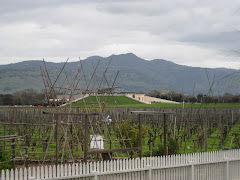
 The Cliff Lede brand highlights Bordeaux varietal wines from its Stags Leap District estate, while the grapes for the Poetry Cabernet Sauvignon hail from the steep terraces of its Stags Leap District acreage. Guests can spend the day relaxing on the winery’s sun-drenched porch area, strolling through the landscaped grounds to admire contemporary sculptures from owner Cliff Lede’s personal collection, or checking out the rotating exhibits from both up-and-coming as well as established artists at The Gallery.
Committed to producing first-rate Bordeaux-style wines, Proprietor Cliff Lede put together a top-notch winemaking triumvirate that includes the extraordinary talents of Winemaker Michelle Edwards (formerly of Colgin), Vineyard Manager David Abreu (Harlan, Colgin, Bryant Family Vineyards, and Screaming Eagle), and internationally renowned Winemaking Consultant, Michel Rolland (Harlan, Bon Pasteur).  Completed in time for the harvest in 2005, the state-of-the-art winery is a testament to the complicated balance of art and science in winemaking. From its triple fruit sorting system to truncated tanks to new caves, no corner was cut in creating a winemaking facility that will make the most of Cliff Lede’s exceptional fruit.
The labor-intensive three-stage hand sorting system limits the amount of grapes that can be processed to a half ton per hour, but ensures that not a single inferior grape makes it into the tank. The chosen grapes are then lifted by a unique crane system that gently places the grapes inside the tanks foregoing the harsh, traditional pumping process. This eliminates shredded grape skins and facilitates the vineyard’s preferred method of whole berry fermentation. Lede commissioned American tank manufacturer Mueller to recreate the distinctive truncated tanks he saw on a trip to Chateau Latour in Bordeaux with Michelle Edwards and David Abreu. The tapered shape of the tanks creates a higher juice-to-skin ratio to create wines of deeper color and greater concentration. Following primary fermentation, all red wines are aged in a recently expanded 25,000 square-foot cave system. Naturally cool with high humidity, the caves are the ideal place for wines to go through secondary fermentation and barrel aging.
All of this cutting-edge technology is housed in a stunning contemporary building that celebrates its site. Renowned architect Howard Backen designed the facility to be functional yet aesthetically engaging, allowing the winemaking team to craft its wines in a landmark building that boasts natural light from abundant skylights and floor-to-ceiling glass entry doors.

Completed in time for the harvest in 2005, the state-of-the-art winery is a testament to the complicated balance of art and science in winemaking. From its triple fruit sorting system to truncated tanks to new caves, no corner was cut in creating a winemaking facility that will make the most of Cliff Lede’s exceptional fruit.The labor-intensive three-stage hand sorting system limits the amount of grapes that can be processed to a half ton per hour, but ensures that not a single inferior grape makes it into the tank. The chosen grapes are then lifted by a unique crane system that gently places the grapes inside the tanks foregoing the harsh, traditional pumping process. This eliminates shredded grape skins and facilitates the vineyard’s preferred method of whole berry fermentation. Lede commissioned American tank manufacturer Mueller to recreate the distinctive truncated tanks he saw on a trip to Chateau Latour in Bordeaux with Michelle Edwards and David Abreu. The tapered shape of the tanks creates a higher juice-to-skin ratio to create wines of deeper color and greater concentration. Following primary fermentation, all red wines are aged in a recently expanded 25,000 square-foot cave system.
Naturally cool with high humidity, the caves are the ideal place for wines to go through secondary fermentation and barrel aging.All of this cutting-edge technology is housed in a stunning contemporary building that celebrates its site. Renowned architect Howard Backen designed the facility to be functional yet aesthetically engaging, allowing the winemaking team to craft its wines in a landmark building that boasts natural light from abundant skylights and floor-to-ceiling glass entry doors.






No comments:
Post a Comment