 The label on the back of each bottle of Peter Michael wine simply says, “Mountain vineyards, classical winemaking, limited production.” Each of these three elements forms an essential component in the final product but it is the mountain vineyards which hold pride of place.
To drink a Peter Michael wine is to experience the flavor and aromas of a vineyard. The philosophy of the winery is irrevocably purist-whatever the vineyard gives becomes the wine. Winemaking serves exclusively to preserve the quintessential character, flavor and personality of each vineyard so as to convey a sense of place or “terroir.”
Notably, the grapes for all Peter Michael wines are grown on steep volcanic mountain slopes of up to 40 degrees. These slopes are oriented toward the morning sun, maximizing light and gentle warmth. The breezes from the Pacific coast to the west cool the vineyards, slowing the ripening of the fruit.
Due to this slow, gradual ripening, harvest at Peter Michael Winery typically starts three to four weeks later than in the valleys, ensuring full physiological maturity of the fruit. In the Les Pavots vineyard, this is especially important as the tannins have shed their harsh edge and the flavors are concentrated and complex.
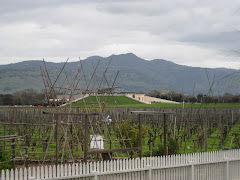
The views from these mountainous vineyards perched nearly 2,000 feet above sea level on the western face of Mount St. Helena are breathtaking. Only the hardy and sure-footed can navigate these slopes whose vine rows plunge straight down the mountainside without a terrace to block them. The vineyard's volcanic-origin rhyolitic soils are extremely rocky and well drained which keeps yields low. The soils are also high in potassium, which boosts photosynthesis imparting deeper color and flavor to the grapes. Extremely rare in wine growing regions, rhyolitic soils are one of the most prized of all wine growing soils. Their rare mineral composition gives grapes exceptionally distinctive flavors and aromas.

The estate Chardonnay vineyards are planted at the highest and coolest elevations on the property, nearly 2,000 feet above sea level. The Chardonnay clones planted in these vineyards are all descended from Corton Charlemagne and have been selected for their low yields which create intense flavors and aromas.
Peter Michael's Les Pavots vineyard is planted to Cabernet Sauvignon, Merlot and Cabernet Franc just below the Chardonnay vineyards at around the 1,500 foot level in extremely rocky volcanic soils. Cuttings for the Cabernet Sauvignon came from the famous Bella Oaks vineyard, the Merlot from the Three Palms, Winery Lake and Truchard vineyards, and the Cabernet Franc from the Madrona Ranch. All are classical, small-cluster clones valued for producing wines with the concentration and structure of a first growth.
To ensure intensity of flavor, the winemaker is severe in keeping the densely planted vine canopies small and growth in check. We call this “bonsai-ing” the vines. Each vineyard site was chosen following extensive research of the soil, climate and grape variety. The cost of planting and farming the mountain vineyards here is at least three times that for valley-floor sites and, of course, hand picking has to be the rule. No machines can navigate these steep slopes.
Granted, the costs are enormous and the yields are low. But since it is here in the mountains where the finest wine grapes are grown, this is where Peter Michael has staked its commitment to quality.





No comments:
Post a Comment