Volcanic Hill
 After wild horses drag me from my bliss at the Peter Michael cottage, we pile (AGAIN) into the rental and head to ZD for our first appointment.
 The label on the back of each bottle of Peter Michael wine simply says, “Mountain vineyards, classical winemaking, limited production.” Each of these three elements forms an essential component in the final product but it is the mountain vineyards which hold pride of place.
 slopes of


 Vineyards is often the first in the area to employ innovative winemaking techniques like the use of oak open-top fermentors. This innovative step has helped catalyze a movement of winemakers across the region that are employing traditional winemaking techniques like hand-punchdowns (pigage) and gravity-flow systems. During the 2004 vintage, all DeLoach Vineyards Russian River Valley, Vineyard Designate and OFS Pinot Noir were vinified using the open-top fermentors and were punched-down by hand.
 The special growing conditions of Dry Creek Valley give its wines a character of elegance. The relatively cool growing season nourishes a distinctive balance in the Valley's grapes, ripening them slowly and evenly. The French would say point, or just right. Both red and white wine grapes retain a measure of acidity, lending themselves to making exuberant wines with lively flavors. The red wine grapes also typically have healthy levels of tannins. These are unabashed tannins, and the better cabernets in particular wear them like a nicely tailored suit. Acidity provides freshness and lift; tannins provide immense flavor interest that bring a person back again and again. Both allow a wine to age handsomely. Notched into the western edge of Dry Creek Valley like a small amphitheater, Wine Creek Canyon nicely sets the stage for ripening point. The Canyon juts into the coastal range just at Dry Creek's temperate mid-section, piercing the Valley's western flank. Michel-Schlumberger's rolling benches buttress the Canyon's northern hillsides, and generally slope south, an exposure that gives them a full day's worth of sun. At the same time, vineyards on these benches are closer to the ocean than most-the Pacific is only seventeen miles away. Shortly after five o'clock the ocean air arrives, and during the ripening season Michel-Schlumberger's vineyards are among the first to cool down. At the end of a working day, if you were to walk along the forest at the western edge of our vineyards, you would experience this change of climate firsthand. It is the time of day when the sun has closed upon the horizon and shadows are cast long over the vines. Ahead, on the terraced uplands to the north, grow the treasured Jackson clones of cabernet. Most of those vines are still in sunlight, and should you step out into that light, you would feel the heat of a western day. But here in the shadows a distinctly cool and constant breeze has begun to flow out of the trees and into the vineyards. This breeze feels remarkably like air conditioning. Its noteworthy cooling power goes a long way toward explaining how grapes in this little pocket canyon can ripen fully, and succulently, without losing their composure.
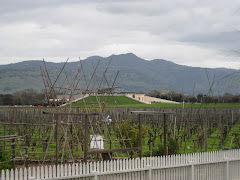
 the top and fanning out down to the road. There are nearly twenty blocks of vineyards (and an olive orchard) on this shoulder with different exposures and elevations. To the other side of the waterway are a series of knolls surrounding a lake above the winery. Each knoll has its peculiarities, hence its own selection of grapes, rootstock, and spacing. Below the lake is another broad shoulder fanning down to the road. The soil here is "river conglomerate," a particularly rocky soil unique to Dry Creek with superb drainage. Above the lake is the terraced upland vineyard, rising steeply to a saddle on the hill. This vineyard grows in the red volcanic soil of Dry Creek Valley's hinterlands, long prized for premium vineyards. In these red volcanic soils grow our Jackson clones of cabernet sauvignon. This species of cabernet (prosaically known as #6)
  takes its name from a long lost vineyard in the Sierra foothills. In the 19th century UC Berkeley maintained it as an index vineyard. Lore has it that the vineyard lay utterly abandoned after Prohibition, only to be re-discovered by a graduate student researching available plant material in the mid-1960s. The really exciting thing about this wild vineyard is that its vines are pre-phylloxera selections, dating from the mid-19th century. They are free of disease and have never had to undergo modern horticultural remedies such as sterilizing heat treatments. These vines also yield meager amounts of grapes, which almost certainly accounts for their lack of acceptance by the grape growers of yesteryear. But while the quantity of grapes may be paltry, the quality of flavor is exceptional, which is why today the Jackson clones are embraced by California's best estate wineries. The Jackson signature is rich varietal spice and earthy minerality with unusually concentrated, lavish, mouth-filling fruitiness, coupled with surprising clarity and elegance- achieved without numbing levels of alcohol. The various Jackson clones of cabernet, petit verdot, and pinot noir are especially promising, and our vineyards include clones of all three varieties. Over the years Michel-Schlumberger has garnered a reputation for its structured and aromatic merlot. Many of our most recently planted merlot clones grow on Riperia Gloria rootstock. Highly regarded in Bordeaux, this rootstock is quite rare in Sonoma County because it is the most vigor-limiting rootstock available-again, meager grapes with exceptional flavors. As in the past, small amounts of cabernet and cabernet franc are blended with the merlot. To add to this complexity, we have planted petit verdot and malbec to blend for color and spice. The syrah vines consist of several clones planted on both the benchlands and on Bradford Mountain, where these vines share our steep slope with five other varieties. Grapes from the mountain have excellent acidities coupled with depth and intensity of flavor; grapes from the benchlands have broader flavors, more generous and less etched in profile. Small amounts of zinfandel and viognier are blended into the syrah. Much the same as grenache in
  southern France, Dry Creek zinfandel gives broad, spicy flavors to syrah's deep dark density. Viognier lifts the aromatics into a lovely perfume. We are making a small amount of pinot noir from two Jackson clones and four Dijon clones recently made available from France. Ours has none of the green flavors and high alcohol that commonly mar new world pinot noir. Rather, it is a wine of fragrance, filled with flavors of pure black cherry fruit, and finishing with length and elegance. Our chardonnay program has been completely renewed. Gone are the old plantings of the Wente clone, long the mainstay of California chardonnay; replacing them are several Dijon clones and the famous Robert Young clone. In the years to come, we will introduce at least one (possibly two, should distinctions merit) vineyard-designated chardonnay. We hope that it will show the real potential of Dry Creek Valley for this variety. Lastly, we will continue to make authentic pinot blanc from Alsatian clones. Jacques Schlumberger's family comes from Alsace
  and this variety is a natural one for us. Our rendition has always been crisp and spry, redolent of fresh melon. The high-density plantings, growing in some of our coolest terroirs, or growing areas, soon will add a further dimension of flavor to this wine. Terroir, a simple concept of place, is not some marketing idea to which we pay lip service. It is a defining idea for Michel-Schlumberger. We have gone to great lengths to match plant material, spacing, and trellising to specific sites in order to best take advantage of each site's characteristics. We farm these parcels conscientiously and ecologically in order to nourish the ground and their vines. The nuance of a great wine, its heart and soul and individuality, comes from the soil and its vines. One can nudge a wine here and there in the cellar, but the quality and personality come from the vineyard.
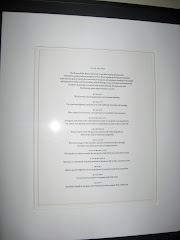
  "Oysters and Pearls"
 Confit of Bluefin Tuna
 Snake River Farms "Calotte de Boeuf Grillee"
 Mrs. Quicke's Cheddar
 Valrhona Chocolate "Dobos"
 Maui Pineapple "Pavlova"
 "Mignardises"
 The wines we enjoyed...
 Heading into the kitchen for a quick tour...
 Enjoying barrel tastings at Steltzner! We love the '06 Syrah!
 Sinskey's tasting room....
 ....and their library, deep in the caves!
 We arrive at Duckhorn, and are pretty full of ourselves. We have an appointment for a private tasting and tour, but are once again shuffled in with the yokels from Mississippi and Indiana. We ditch the tour (pictures to follow) and head to a Mexican Cantina (where is the logic in that...9 courses coming soon!) for a lite lunch of fajitas and burritos then back to Mr. Larkin's for the Super Bowl. (Melissa's note: Being trapped in a condo with a Giants fan and a Patriots fan was quite the "Dear Diary" moment. While Kelly's ritual is to sport a "I HATE PEYTON MANNING; ELI SUCKS TOO" shirt and scream at the television, Kim prefers a more passive technique of hiding under the covers of the bed when things aren't looking good for Eli. She can tell by the noise of Kelly and me when she can come out.)
 we survived!
 wines have been certified Organic by the California Certified Organic Farmers. Robert Sinskey Vineyards is now one of the largest and most progressive organic vineyard operations in Napa Valley. Organic refers to methods of growing that rely on the earth's natural resources. Pests and weeds are managed using earth-friendly means such as beneficial insects and mechanical controls. Organic farmers work to build natural nutrients in the soil, which help fertilize plants without the use of synthetics. Certified organic produce is grown according to strict standards. CCOF annually inspects farms to insure that no harmful chemicals have been used for at least three years and that growers keep detailed records of their practices.


 Melissa, watch out behind you!!!
 I've seen many whale bones, but I think this is my first elephant tusk!
 The crazy, rotating gravity setup, in a 10-story dome (bomb shelter-esque)
 Fancy-ass computers!
 We found lots of Nantucket paraphernalia at Sean's and it felt like home
 ranches, the Wetzel family settled. They raised livestock, cultivated bountiful gardens and restored Alexander’s original home, making it the center of family life. With an eye to their neighbors in nearby Napa Valley, the Wetzels boldly planted premium grape varieties, among the first in the area. Then the family built a small winery.
 Winemaker Kevin Hall work as a team to maximize fruit flavor in the vineyard and to create balanced wines that capture the grapes’ varietal characteristics. Hank Wetzel oversees the vineyard and winery operations, and his wife Linda continues to oversee administration. Now the third generation of Wetzels has joined the winery. Harry Wetzel, IV is assistant winemaker while younger brother Robert is the National Sales Manager.
 The vineyards grow in more than fourteen unique terroirs at three elevations — 400, 1200, & 1400 feet above sea level and are nurtured by sustainable agriculture. They thrive on the slopes of Mount George at the southern end of the Vaca Range. The foundation for it all is base rock laid down during the Pliocene volcanic age. Geography ranges from steep slopes with shallow nutrient-poor soils, which produce concentrated grapes, to stony colluvial deposits made up of cobbles, gravel, and sandy loam. Variations of soil type, sun exposure, & elevation produce a range of flavors and concentration to create a wine with balance & complexity.
 to the parcels. This provides a complete and pure palette for the winemaker’s art — tasting, appreciating, and blending individual lots to bring balance to the wine.
 Thus, the wine is never subjected to the violent agitation of pumping, which can change the wine’s intra-molecular structure. This gentle treatment allows the finest nuances of flavor to develop naturally—the result is a complex, elegant wine.